Balancing legacy & logic: why corporate governance is the secret power for family businesses
November 2, 2026
Family businesses are unique. They combine commercial ambition with family values, long-term stewardship and a deep commitment to future generations. Unlike publicly owned companies that are often driven by short-term market pressures, family businesses often take a longer view, prioritising sustainability, reputation and legacy. However, the very qualities that make family businesses successful can also create challenges as they grow. Questions around succession, decision-making, ownership, accountability and family dynamics become increasingly complex. This is why effective corporate governance is not merely a regulatory consideration. It is a critical enabler of long-term success.

Why good governance matters

Family Business UK (FBUK) highlights as family businesses grow the importance of having a clear governance framework increases significantly. Good governance provides clarity around how decisions are made, who is accountable and how the interests of the business, its owners and future generations are protected.

Without appropriate governance structures, family businesses can face several common challenges:

  • unclear roles between family members and management
  • difficult succession planning conversations
  • tensions between family interests and business priorities
  • overreliance on founders or key individuals
  • informal decision-making processes that become strained as the business expands
  • lack of independent challenge or external perspective

These issues can heighten during periods of growth, leadership transition or external investment.

Misconceptions of corporate governance in family firms

Some family businesses can view corporate governance as being designed principally for large, publicly listed corporations or associate it with rules, paperwork and regulatory obligations. These misconceptions can be costly.

In a standard corporation, roles are clearly segregated. In a family business, an individual might simultaneously be a loving parent, a majority shareholder and an operational director. Without a clear governance framework, emotional dynamics can takeover strategic commercial decisions.

Implementing formal governance structures doesn’t mean stripping away the unique family spirit that defines a family business. It actually provides a safe, objective framework that protects both the business, the family and its wealth.

The four pillars of strong family business governance

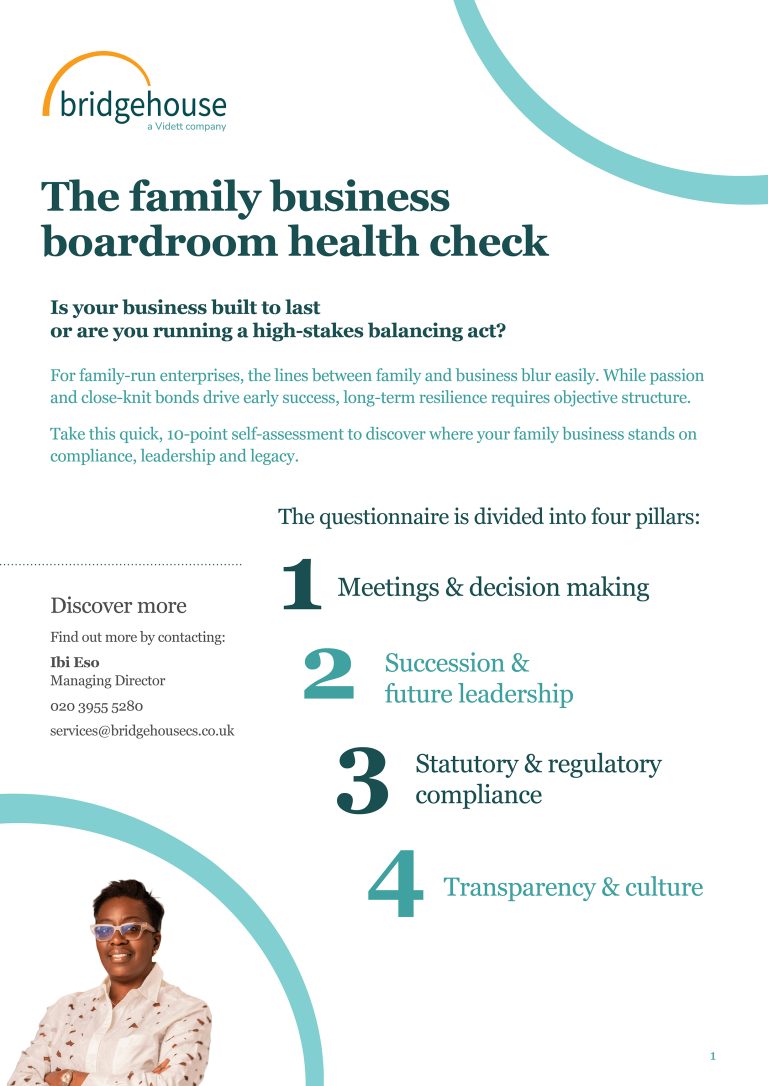
By their very nature, family businesses are aiming for a long term, sustainable future. But there’s a statistical hurdle – the third generation. To get past that hurdle, family businesses should build a governance framework around four key pillars:

  1. Strategic board management: moving away from informal family chats to structured, minuted board meetings. Creating an environment where important decisions are discussed objectively and strategically, rather than being driven solely by history, relationships or habit ensures strategy is documented, legal obligations are monitored and all voices are heard fairly… with board decisions properly recorded and any corresponding actions captured and tracked.
  2. Succession planning & future leadership: one of the biggest risks facing any family business is an unplanned leadership transition. Clear governance structures encourage open conversations about future leadership and ownership and give a transparent succession roadmap, helping ensure smooth transitions between generations by preventing internal power struggles.
  3. Risk & resilience: good governance enables organisations to identify risks, respond to changing market conditions and maintain focus on long-term strategic direction, whilst keeping pace with tightening UK regulations.
  4. Transparency, accountability & preserving harmony: establishing clear boundaries between what is a family issue and what is a business issue with clear responsibilities and documented organisation processes and internal controls can reduce misunderstandings, help manage disagreements constructively and ensure non-family executives feel empowered and valued.


Building a legacy for future generations

As Family Business UK highlights, the UK’s family business sector plays a vital role in driving economic prosperity, creating employment and supporting communities across the country.

The most successful family firms are those that actively invest in their own resilience and long-term structure. Good corporate governance does not stifle the entrepreneurial passion of a family business – it anchors it. For family businesses, governance is about protecting the legacy that previous generations have built while creating a framework that enables future generations to thrive.

With the right governance structures, family businesses can navigate complexity, manage succession effectively and continue creating value for decades to come.

At Bridgehouse, we help family businesses put those foundations in place.


How Bridgehouse supports family businesses

At Bridgehouse, we understand governance is not about imposing bureaucracy. It is about creating the right structures, processes and behaviours to support effective leadership and sustainable success.

Our team works with family businesses to strengthen governance frameworks, support boards and improve decision-making. We provide practical, proportionate advice tailored to your needs, recognising that every family business is different.

We can support family businesses through:
  • Objective boardroom support: by managing board and committee logistics, drafting precise minutes and tracking actions, Bridgehouse removes emotional friction from meetings, ensuring board decisions are captured and grounded in commercial logic.
  • Expert governance advice: from conducting independent governance reviews to helping design custom governance frameworks, Bridgehouse guides families on how to structure their governance without losing their uniqueness.
  • Succession planning: helping you assess the skills and knowledge you have on the board against those you need, creating development and succession plans and supporting leadership transition support.
  • Frictionless statutory compliance: handling everything from company formations to lifecycle management, ensuring your business remains firmly aligned with corporate law.
  • Regulatory peace of mind: ensuring you’re meeting all regulatory requirements – including Director and PSC identity verification checks under the Economic Crime and Corporate Transparency Act 2023.


Is your family business truly structured for the next generation?

Download the family business boardroom health check to identify hidden compliance risks, remove boardroom friction and safeguard your legacy.

Get in touch

We would be pleased to answer any queries or have an informal chat to discuss your possible governance needs.